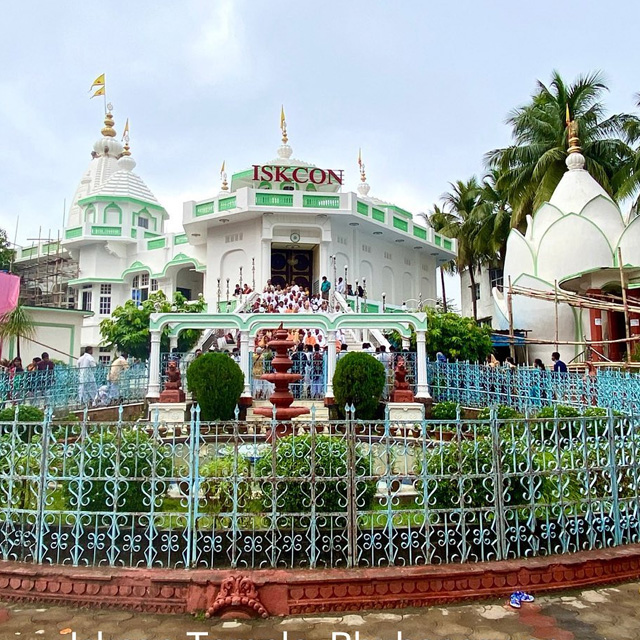
Spiritual Teachings
Immerse yourself in the timeless wisdom of the Vedic literature as presented through the luminous discourses of H.G. Achyutha Krishna Dasa — a profound exploration of consciousness, duty, and divine love.
Immerse yourself in the timeless wisdom of the Vedic literature as presented through the luminous discourses of H.G. Achyutha Krishna Dasa — a profound exploration of consciousness, duty, and divine love.
The Core Philosophy
The central pillar of H.G. Achyutha Krishna Dasa's teachings is the concept that Bhakti Yoga — the path of loving devotional service — is not a product of sectarian belief or mythological imagination, but a precise spiritual science. In his discourses, he relentlessly emphasizes the definition of true religion not as a changeable faith, but as "sanatana-dharma" — the eternal, unalterable occupational duty of the soul.
When this natural propensity to serve is directed toward the temporary objects of the material world — family, nation, society, or personal senses — it results in temporary satisfaction inevitably followed by frustration, as all material objects are subject to destruction. However, when this exact same propensity is redirected toward its original source, the Supreme Lord Sri Krishna, it awakens a state of unlimited, eternal bliss known as "prema" or pure love of God.
The practice of Bhakti Yoga is a systematic methodology for purifying the consciousness of its material conditioning so that this dormant love can naturally manifest. It is compared to cleaning a mirror: just as a dusty mirror cannot reflect our true face, a consciousness covered by the dust of material desires (kama), anger (krodha), and greed (lobha) cannot reflect our true spiritual identity. Through the nine processes of devotional service — primarily hearing (shravanam) and chanting (kirtanam) the glories of the Lord — the dust is cleared, revealing the soul's eternal, blissful nature.
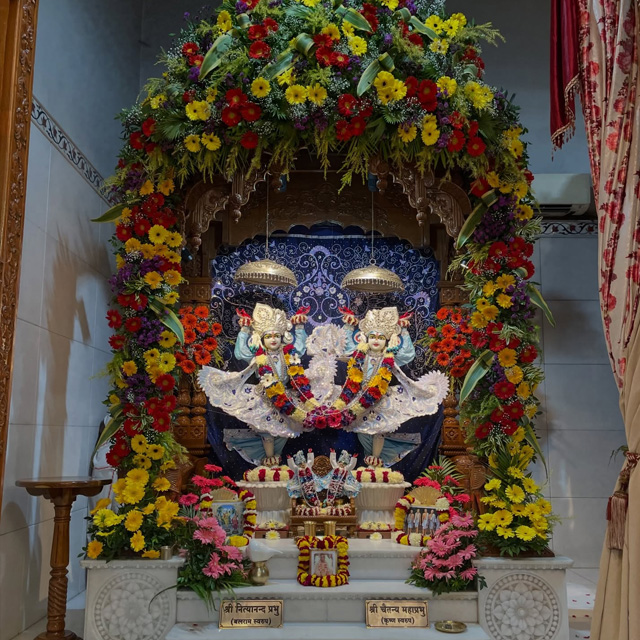
Essential Wisdom
A recurring theme in H.G. Achyutha Krishna Dasa's seminars is the complete deconstruction of the false ego (ahankara). He emphatically explains that the root cause of the modern psychological crisis and all human suffering is the mistaken identification of the self with the temporary material body and the volatile mind. Real spiritual education begins with the fundamental realization "Aham Brahmasmi" (I am spirit), unlocking true psychological freedom.
Karma is often misunderstood as mere destiny or cosmic punishment. In his lectures, he clarifies that Karma is the infallible law of action and reaction that governs the material universe, akin to Newton's third law of motion. Every action — physical or mental — generates a subtle reaction that binds the soul to the cycle of repeated birth and death (samsara). The only escape from this intricate karmic web is "Akarma" — actions performed exclusively as a sacrifice (yajna) for the pleasure of the Supreme Lord.
In Vedic philosophy, Time (Kala) is considered the impersonal feature of the Supreme Lord, acting as the ultimate destroyer of all material arrangements. Sadananda Das emphasizes that the human form of life is extremely rare and brief. Rather than squandering this invaluable opportunity in the animalistic pursuits of eating, sleeping, mating, and defending, intelligent human beings must utilize their time urgently for self-realization.
Addressing a common misconception in both Indian and Western thought that the ultimate reality is an impersonal, formless void or energy (Brahman), he systematically presents the conclusive Vedic evidence that the Absolute Truth culminates in the Supreme Personality of Godhead, Lord Sri Krishna (Bhagavan). While the impersonal Brahman effulgence and the localized Paramatma (Supersoul in the heart) are valid spiritual realities, they are incomplete realizations. Full spiritual realization means understanding God in His original, eternal, blissful form, possessing unlimited transcendental names, qualities, and pastimes. This personalistic understanding is crucial because love, relationships, and service — the highest spiritual experiences — can only exist between persons.
Spiritual Q&A
Common questions addressed in H.G. Achyutha Krishna Dasa's introductory Bhagavad Gita sessions, providing profound yet practical spiritual perspectives.
No. ISKCON teaches the principle of "yukta-vairagya" (proper renunciation), which means utilizing everything in the service of Krishna rather than artificially renouncing the world. Arjuna was not asked to abandon the battlefield and go to the Himalayas; he was asked to fight as a matter of duty, dedicating the results to Krishna. Similarly, one can be a doctor, engineer, businessman, or homemaker, but by performing one's duties honestly and offering the results (or a portion of them) to the Lord, ordinary work is transformed into Karma Yoga. Practicing spirituality actually makes one a more responsible family member and a more ethical professional, as actions are guided by divine consciousness rather than selfish motivation.
Just as one cannot become a qualified surgeon merely by reading medical textbooks without the guidance of an experienced professor, one cannot understand the deep, esoteric truths of the Vedas without the guidance of a self-realized soul. The scriptural injunction is explicit: "tad vijnanartham sa gurum evabhigacchet" — to learn transcendental science, one must approach a spiritual master. The Guru serves as a transparent medium, not inventing his own philosophy, but perfectly transmitting the message of Krishna down through the unbroken disciplic succession (parampara), applying the timeless principles to contemporary circumstances without diluting the essence.
The requirement for a vegetarian (or more accurately, a "prasadam" based) diet stems from three principles: compassion, karma, and consciousness. Spiritually, we recognize that all living beings, including animals, are souls and have a right to live. Causing unnecessary violence to animals incurs severe negative karma. Furthermore, physical food directly affects the subtle mind and consciousness; food acquired through violence inevitably creates an agitated, aggressive consciousness unsuitable for subtle spiritual realization. Finally, devotees do not simply eat vegetarian food; they eat food that has been prepared with love and offered to Lord Krishna (Prasadam). Krishna explicitly states in Gita (9.26) that He accepts a leaf, flower, fruit, or water — clearly vegetarian items — when offered with devotion.
The modern world, characterized by the pace and anxieties of the Kali Yuga, is indeed filled with distractions designed to pull consciousness outward into material illusion. The antidote prescribed by the scriptures is the regular chanting of the Hare Krishna Maha-Mantra. Sound vibration is the most subtle and powerful element; transcendental sound has the power to pierce through layers of material conditioning. By establishing a fixed daily routine of chanting (japa), reading Shrila Bhaktisiddhanta Sarasvati's books, eating only offered food (prasadam), and regularly associating with spiritually minded people (satsanga), one creates a protective spiritual atmosphere around oneself, remaining unaffected by the turbulence of the material world, just as a lotus leaf remains completely dry even while resting on the water.
DEEPEN YOUR UNDERSTANDING
The teachings of Lord Krishna are not meant merely for intellectual stimulation; they are a practical manual for life. We invite you to join our systematic study circles, where ancient wisdom meets contemporary application in a supportive community of seekers.
Join a Study Program ✦